



SCHOOL-COMMUNITY CONNECTIONS OPEN NEW DOORS FOR STUDENTS, FAMILIES
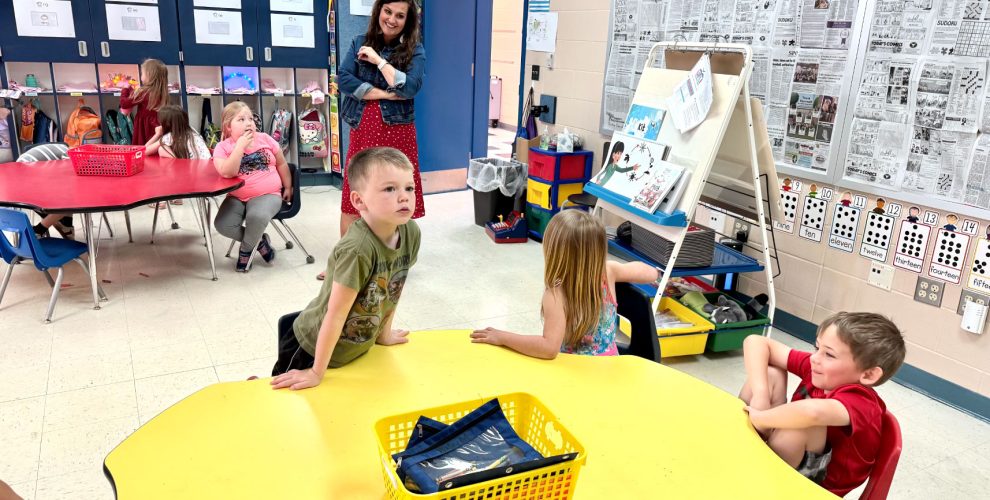
SIMPSONVILLE, Ky. — While a spirited group of elementary students whirl through the games and water play of Simpsonville Elementary School’s end-of-the-school-year field day, a blossoming class project inside awaits its own graduation and marks the growth of the school year.
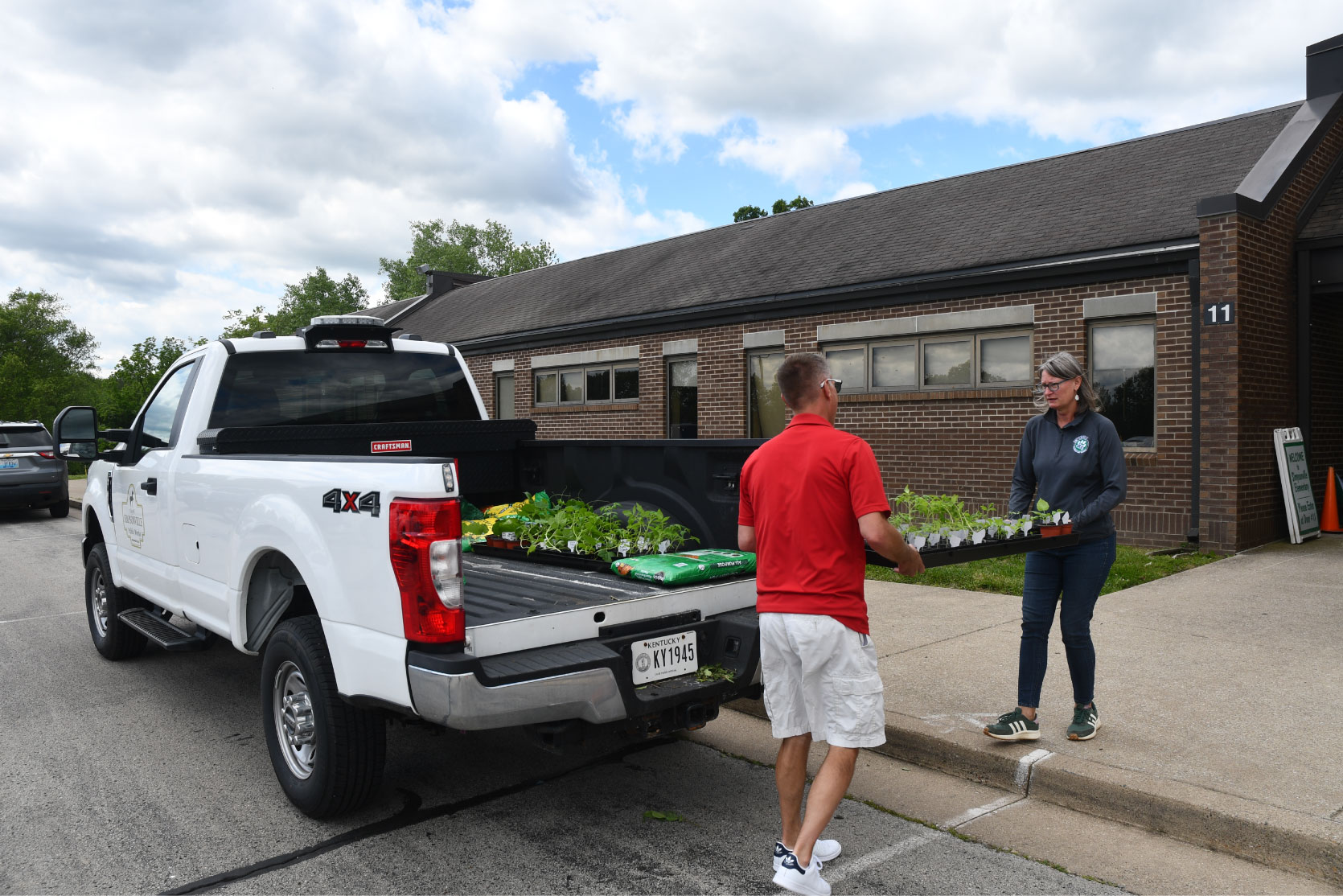
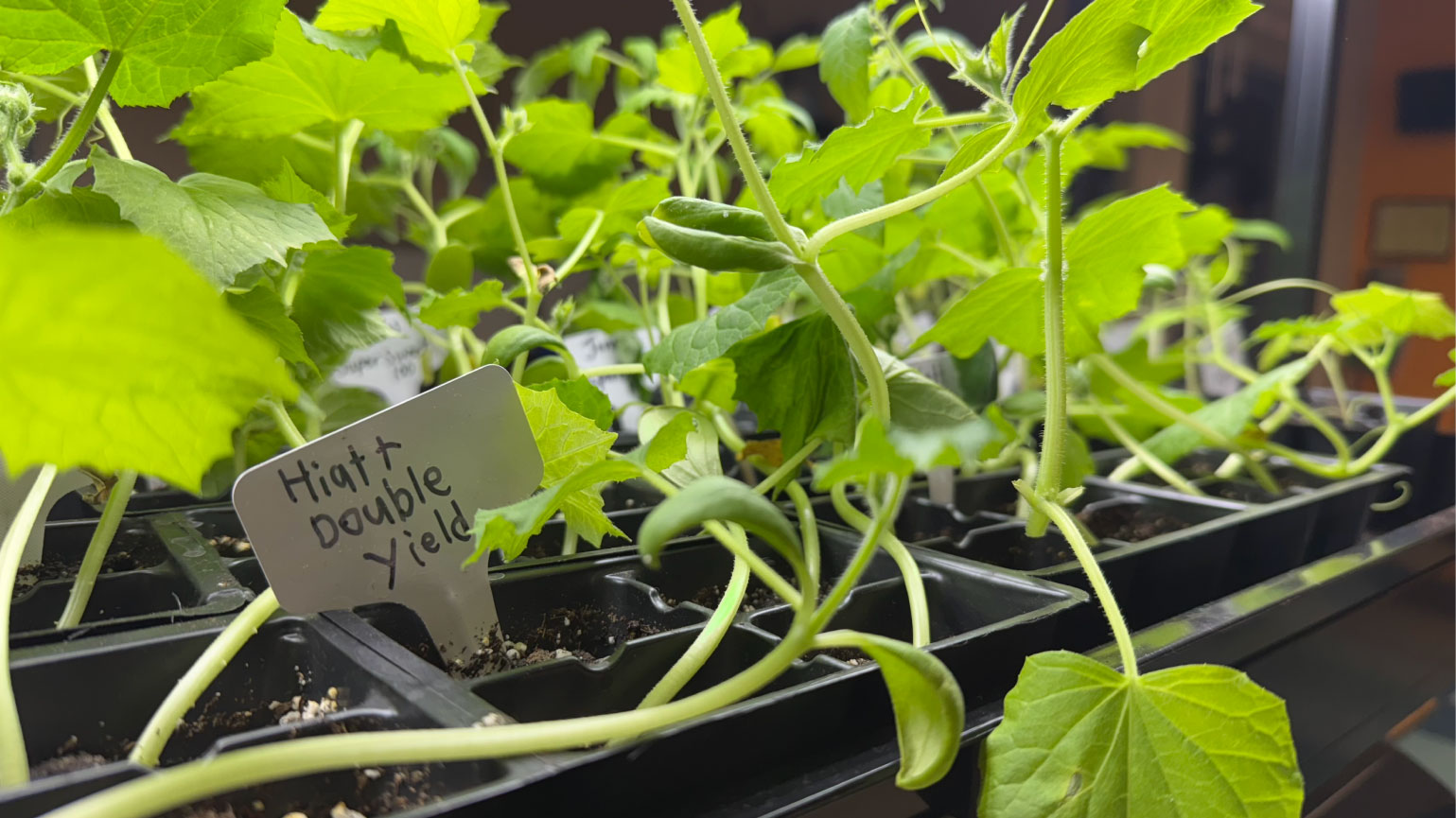
It is moving day for a vigorous rack of plants in Katie Strange’s STEAM classroom. Trays of greens and veggies are bound for raised beds in the middle of town where they will provide a fitting backdrop and local produce for the local Farmers Market this summer.
The initial crop planted, tended, and studied by the school’s youngest students has sprouted and spread alongside new ambitions by the school and the local parks department. The partnership sparked by Shelby County’s community schools initiative has taken off faster than the most fertile Double Yield Cucumber.
As the plants move toward spacious outdoor beds, Simpsonville teachers and leaders are already planning an outdoor greenhouse to expand hands-on science experiences as well as using parent volunteers to till and maintain an extensive pumpkin patch in a back corner of the school property.
The city parks and recreation department, meanwhile, used a promising solution to its dwindling produce supply at the Saturday market to also become more involved in offering sports clinics during P.E. classes to help its youth leagues grow. Its ability to reach more families also produced a record turnout at the city’s holiday tree lighting event.
The community schools partnership push has not only meant more engaging learning for students and families, but also opened new ties in the community.
“The last two or three years, we haven’t had enough produce vendors to stock our farmer’s market,” said Chris Truelock, the parks and recreation director for Simpsonville. “It got to a point where we decided we needed to solve it ourselves. Just by chance, the community schools focus meant the school now had staff and the financial ability to allow us to work together at a new level, and it’s been a game changer.”
“We’ve always had a good relationship with the schools, but having dedicated staff on both ends allowed us to achieve so much more,” Truelock added.
The recent school year yielded similar stories in other community schools sites.
“It’s helped me develop my program even more and offer it to a lot more kids,” said Molly Jordan, the 4-H youth development agent in Bracken County in northern Kentucky.
The Bracken district’s launch of new in-school clubs and afterschool programs based on student interests — from welding and cooking to Lego building and art — brought 4-H in to handle several of the new offerings. “Going into schools more has made more people aware of our programs as well, so it works both ways,” Jordan said.
TAPPING THE POWER OF LOCAL NEEDS, INTERESTS
“We hope that our students and families feel a stronger sense of belonging,” said Travis Marcum, former senior director of community schools for the Prichard Committee. “That school is not something separate — that the school is a hub where everyone meets to work together on the future of the community.”
Prichard is working with 20 school districts across Kentucky to implement a federal grant to help schools expand their community connections and effectiveness. Marcum said the initiative has seen impressive success stories across the state in the program’s first full school year.
The goals of the federal Full-Service Community Schools Program are to expand learning time and opportunities for students, increase family and student engagement, and build collaborative leadership while also reducing out-of-school barriers to learning. Districts connected to the grant awarded to the Prichard Committee added full-time Community Schools Directors. They have focused on deeper local partnerships to build community awareness and involvement around the program’s goals.

Local efforts have taken different shapes based on district priorities. Across the board, however, parents and students said that awareness of school goals, opportunities to have a voice in decision making, and interest in becoming more involved have improved during this school year.
“The access to try new things has made a huge impact,” said Samantha Jones, a parent at 450-student Taylor Elementary in Bracken County. “Students want to get engaged, and they see their friends involved in new things and shining in brand new areas.” As a parent member of the school council, Jones has been aware of participation data and seen how it is influencing areas like attendance and achievement.
Students and parents alike have responded to opportunities to be more involved in suggesting new in-school activities or afterschool offerings, she said. “Seeing the numbers grow and the new ideas and sparks of creativity have been exciting,” Jones said.
At Bracken County Middle School, Garrett Wright, an eighth grader, explained that while he has “always been a person who wants to go to school,” the new opportunities and recognitions this year have been encouraging.
A new cooking class was a big hit with Garrett and many classmates at the 250-student middle school, he said. “I like being in the kitchen — the kitchen is everything to me, and I’d like to be better.”
His grandmother owns a local restaurant, and he likes helping there. Having school connect with his own interests and seeing others respond similarly to new offerings like martial arts or drama added motivation and buzz that carried over to regular classes, he said.
The K-8 student interest clubs drew 150 students in the fall and 90 more in the spring, said Samantha Wilson, the Bracken County community schools director. The new offerings depended heavily on student interest and staff and community support — a local resident who works at the Cincinnati airport volunteered to teach about aviation, including creating aircraft to test fly. High school students served as mentors for students learning about cooking, welding, and other subjects.
Enhanced afterschool offerings, another result of community meetings and student input, included a Sunshine Club that worked on volunteer projects and mental-health awareness, and a pinewood derby where students and families could build a race a wooden toy car.
The partnership focus led to expanded school-based work by the local health department and a drive to supply students led by a local shoe store.
“Asking students, families, and the community what they need and merging school and partnership efforts together is making a greater impact,” Wilson said. “Community schools is about longer-lasting systems involving the community resources that are already out there.”
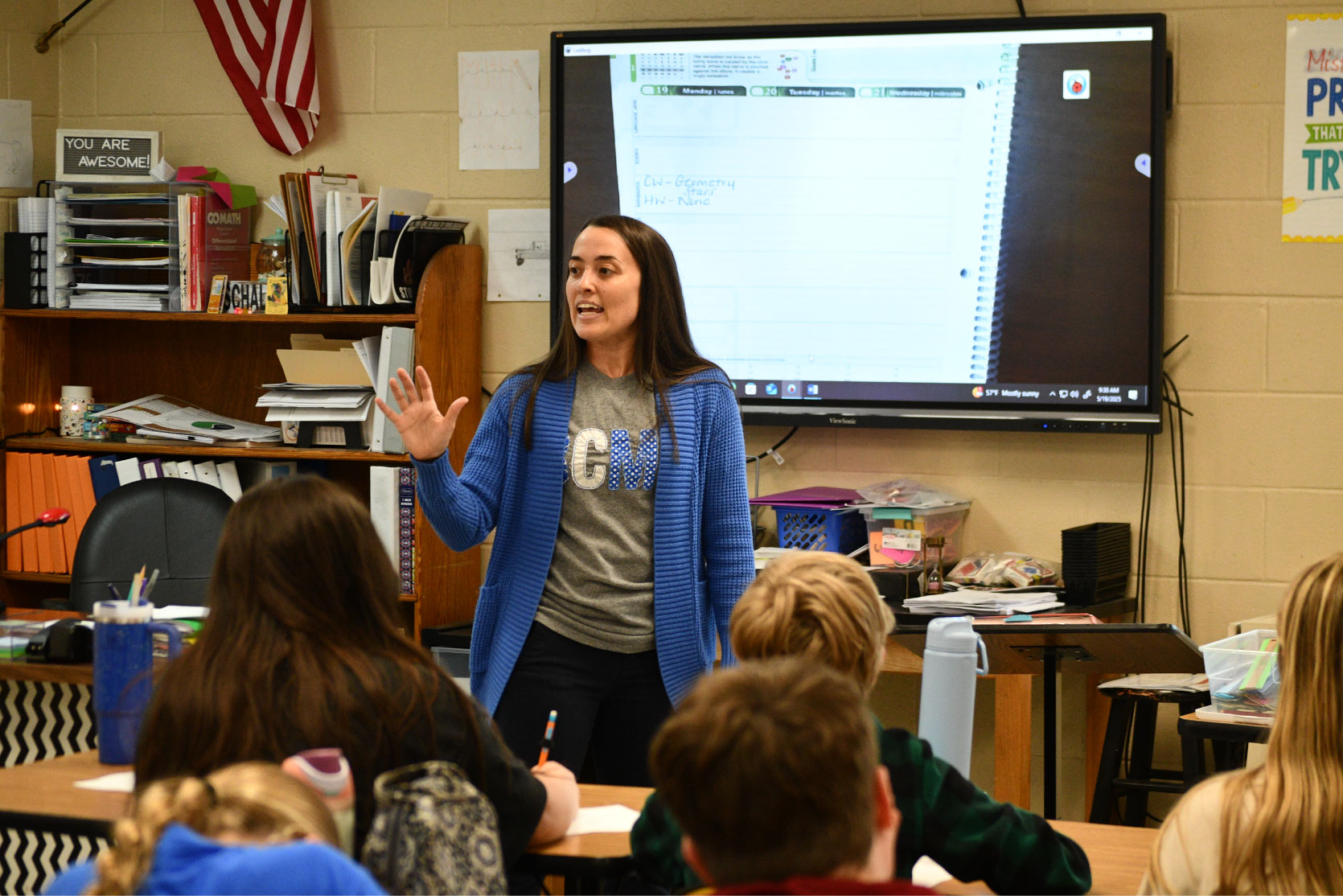
Expanded learning time and collaborative decisions underscore the Bracken district’s goal of nurturing students to be self-directed learners, she added. New hands-on projects also provide opportunities to build communication and collaboration skills, also recently-added district priorities.
Wilson said that to students or families, the results show that schools are becoming more effective, responsive, and welcoming.
“They see that we believe that we all serve as co-creators of student success and school improvement,” she said. “And that we all have to contribute to have success.”
“We are learning how to do things more by building and using imagination,” said third-grader Ephriam Brewer. “That it’s OK to mess up and make mistakes, which you can use in math and stuff like that. We learn new things every day and have a good time.”
Callie Dunn, a sixth grader, said the expanded opportunities made her eager to learn more.
“By doing new things, you see if you like it,” she said. Callie felt sure that a drama project would be up her alley, while painting, sewing, and a book club felt like explorations. “It helps you make connections, plus, I found that when I joined classes and clubs, I made a variety of friends. I now have two new friends because this brought us together as a team,” she said.
BUILDING FRESH MOMENTUM FOR LEARNING
“Getting dirty in science is fun, and I like working with my hands more,” said Henry Blank, a fifth grader at 440-student Simpsonville Elementary in central Kentucky. He has enjoyed watching the STEAM garden take off. He said he now has a solid understanding of germination — a science concept that previously seemed like a foreign term.
“The kids are obsessed,” explained Katie Strange, the elementary STEAM room teacher. “I am not a gardener — there’s not a single gardening bone in my body. But this makes science real for them instead of saying ‘let’s learn about the plant’s life cycle.’ This gave them the opportunity to see it from the beginning.”
The gardening project is only one of the partnerships that gained momentum in Shelby County this year through the community schools emphasis. Police officers have volunteered as student mentors. A local church began coordinating various types of volunteer assistance at East Middle School.
Josh Rhodes, a former principal who served as the district’s community schools director, said his schedule was dedicated to making community organizations, employers, and civic groups aware of the district’s goals and its desire to better utilize local partners.
“I’ve been able to show how their organization can fit into our schools’ work,” he said. “A lot of it is about people plugging me into their networks. I feel like we’ve been successful in garnering interest and helping people see how they can be involved with our schools. Those connections turn outside community resources and interest into new opportunities for students, families, and educators.
The impressive takeoff of the Simpsonville parks collaboration and the school gardening effort gave school leaders a new view of the potential for deeper student learning, new community connections, and long-term ties between schools and other local resources.
This summer, the parks department organized a Bobcat Farms Summer Workshop for elementary students on Tuesday evenings in June and July. “Do you have what it takes to be a farmer?” promotional materials ask. “In addition to tending to the Bobcat Farms plots at Simpsonville Park, participants will explore the wonderful world of gardening and farming through hands-on activities, crafts, games and guest speakers.” The sessions were full before school dismissed.
Meanwhile, the city is also beginning planning for a new park after 125 acres of land were donated this year. Coincidentally, the property backs up to Simpsonville Elementary. Conversations have already focused on how it might expand outdoor learning and offer a school/community gardening component just across the creek from the schools’ planned pumpkin patch. The additional space could help supply the school cafeteria.
School leaders have begun discussing how student efforts to market their produce or create their own salsa brand, complete with a kid-approved recipe and student-designed logo, could bring reading, writing, and arts learning to life.
“This has opened doors for new learning opportunities that will benefit students, teachers, and community members,” said Angie Oakley, coordinator of the Simpsonville school’s family resource center. The initiative has connected with families, which encourages parents to be more involved, she added. Fifth grader Henry’s father, a landscape supply store manager, donated gravel for the base of the outdoor greenhouse.
“The grant pushed us to work together toward common goals, and it’s amazing how quickly this has succeeded,” said Truelock, the local parks director.
Second-grader Shaidany Boston said she has learned a great deal from only a few months of witnessing plants sprouting and growing.
“I’ve been surprised about a lot of things. When we planted the seeds, I thought the first thing that would grow would be a leaf, but the first that grows is the roots,” she recalled. “The plants are way bigger than I’d expect they would turn out. It’s just amazing.
“When we saw flowers, we predicted what would happen next. It’s really extraordinary to see a seed turning into something that you get to taste,” she said. “I really like learning new things in science and seeing little things turn into big things.”