




SCHOOLS DEEPEN LOCAL PARTNERSHIPS TO FUEL ACHIEVEMENT GOALS
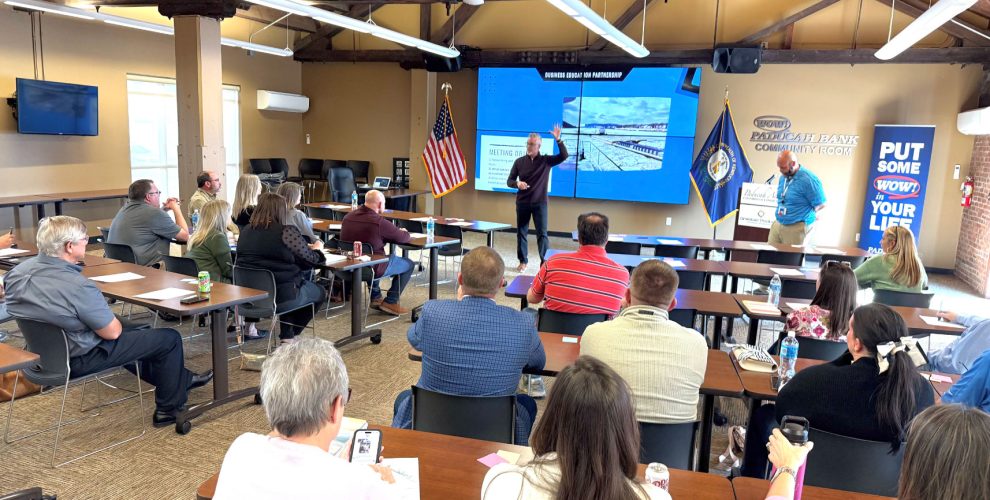
PADUCAH, Ky. — In a meeting room two blocks from the Ohio River, school officials host business managers connected to the busy waterway for a new round of introductions. One of
the first questions was whether the firms — an industrial supply distributor, a sand and gravel provider, and marine repair and transport companies — had a solid point of contact with the local schools.
Only a few hands went up.
The meeting’s organizers knew this session would be a starting point.
As the first-ever community schools directors for the two local school systems, Marc Mavigliano in McCracken County and Allen Treece in Paducah, are determined that the gathering will launch important new connections between river-related businesses and local educators and students. The session followed similar recent gatherings with employers in the skilled trades and the local health care sector.
In districts across Kentucky, local partnerships — often the source of extras like guest speakers, annual field trips, or sponsorship banners in sports venues — are expanding significantly under the Kentucky Community Schools Initiative. Through a federal grant implemented by the Prichard Committee, local education leaders are taking a new approach to existing resources to tackle districts’ key strategic goals.
In Paducah and McCracken, the community schools directors have become an active presence in local civic groups, social service organizations, and circles of educators, students, and families this school year.
Deeper collaboration with existing agencies and employers is generating new plans for relevant experiences for students, resources that support families, and expertise and adult-life opportunities to open new doors for teachers and classrooms.
“Coordinating assets that are already existing and baking them into the system — in the past six months we’re already seeing this changing how we think about schools,” said Brooke Gill, director of the Prichard Committee’s Collaborative for Families and Schools. “Connections are happening to show that schools don’t have to do it alone. Community partnerships are a critical path, and with somebody to keep the conversations rolling, they can be a game changer.”
Local school leaders from the 20 Kentucky districts participating in the federal grant said the outreach is prompting a surge of interest and input from community groups and businesses — and redefining ties to families and students. The expanded and focused involvement is demonstrating new potential to implement schools’ goals to boost student outcomes.
“We’ve been able to improve solutions to issues we’ve struggled with for years because the community is at the table every step of the way,” said Suzanne Farmer, chief academic officer for the Danville school district. The district sought the community schools grant through Prichard because of its ability to energize local backing.
“We had a lot of community support already, but this is taking us to a different level,” Farmer added.
Josh Hunt, the McCracken County schools superintendent, said increased community outreach and input have sharpened and intensified the district’s goals for student engagement and achievement.
“In conversations about how we support and prepare students or how we create expanded learning opportunities, we’ve come to better understand what it looks like for us,” he said. “This grant allows flexibility to create our own vision and markers for accountability.”
TAPPING ECONOMIC OPPORTUNITIES, EXPERTISE
The federal Full-Service Community Schools Program seeks to increase student attendance, engagement, and success by encouraging schools to become a more powerful community catalyst — maximizing local interest and involvement in supporting schools, families, and students through expanded learning opportunities.
In the first full school year for districts connected to Prichard’s grant, the program is producing encouraging results by forging new ways for schools to work side-by-side with local enterprises that rely on schools’ ability to produce students well-prepared for adult life.
“Having everyone at the table talking together doesn’t happen as often as you think,” said Mavigliano, the community schools director in the 6,600-student McCracken County district.
He noted a familiar litany of challenges that more than occupy many education administrators: School principals swamped by day-to-day issues and the ongoing needs of students, families, and education systems. Counselors juggling myriad student concerns and academic requirements. Family resource and youth service staff meeting pressing family issues, providing for immediate student needs, and opening channels to local resources that supply necessities or avert crises.
“We often don’t connect with people in the community the way that we should,” Mavigliano explained. “The community schools grant has created a process to help us connect in ways not done before, opening new partnerships and a brighter future for our students and families.”
From the beginning, McCracken school leaders saw the grant as an opportunity to rethink how students apply academic experiences and acquire relevant skills. Stronger ties to employers, civic groups, and current workers are key to the upgrade.
“We’re looking with the community at what a graduate needs so that as many of our students as possible are prepared and capable to succeed with choices at their disposal,” Superintendent Hunt said. “This grant has helped us to hear what our graduates were missing, what is needed, and how we can make the most of the opportunities available.”
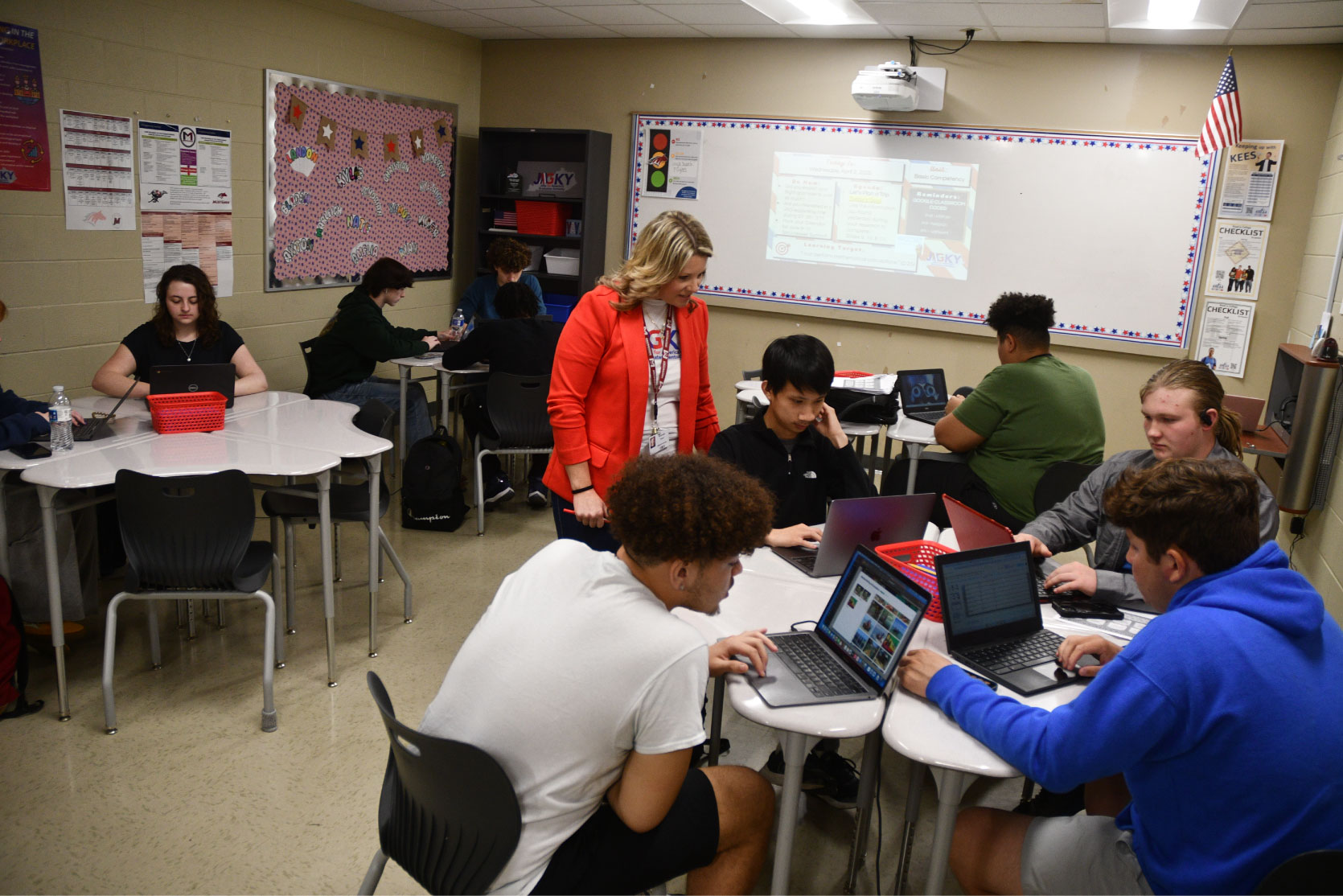
At McCracken County High, serving 1,900 students, that focus has led to a new elective class focused on job skills, postsecondary options, career exploration, and a year of transition support upon graduation. The school also adopted a freshman academy, aimed at creating smaller groups, personalized approaches, and mentors for all students. This spring, the high school announced it is joining with Ford Next Generation Learning —a workforce development and education consulting project of the Ford Motor Company Fund working with about 30 school districts nationwide.
The school aims to implement career-focused academics, work-based learning, teacher training, family engagement and more to prepare more students for success beyond high school in the coming years. The goal is to transform the high school experience to include greater community involvement and postsecondary planning.
“We are ready to make change, and meeting community needs has to drive it,” said Jonathan Smith, the high school principal.
Smith called the community schools grant essential. The addition of a full-time community schools director is instrumental in building new connections that have already led to new off-campus opportunities for students, Smith said, with more in the works.
“We get caught in a rat race of day-to-day school operations,” the principal said. “Forward-looking ideas can get put on the back burner. Having Marc to help guide us and follow-up has been crucial. It is making us more successful for everyone.”
Indeed, the Ford NGL team cites minimal focus on partnership-building as a force that holds back most schools. Active community outreach and coordination is a prerequisite for the group’s involvement.
“Without experienced staff dedicated to building and supporting partnerships, your district faces a significant capacity gap,” said Jenn Edge, Ford NGL’s director of powerful partnership. In a video for school systems interested in the group’s help, she added that to be effective, partnership work needs to be closely aligned with district and school goals and data collection.
ENLISTING COMMUNITY ORGANIZATIONS, FAMILIES
In Danville, utilizing partnerships to advance its education priorities has created more intentional connections with local community agencies and businesses. At the same time, the community schools director is expanding services and options for students to make community involvement a clear part of their school experience.
That can range from recent sessions where high school students met with city engineers and parks department staff about a possible new community swimming pool to organizing a group of first-generation college students to assist high schoolers preparing for postsecondary options.
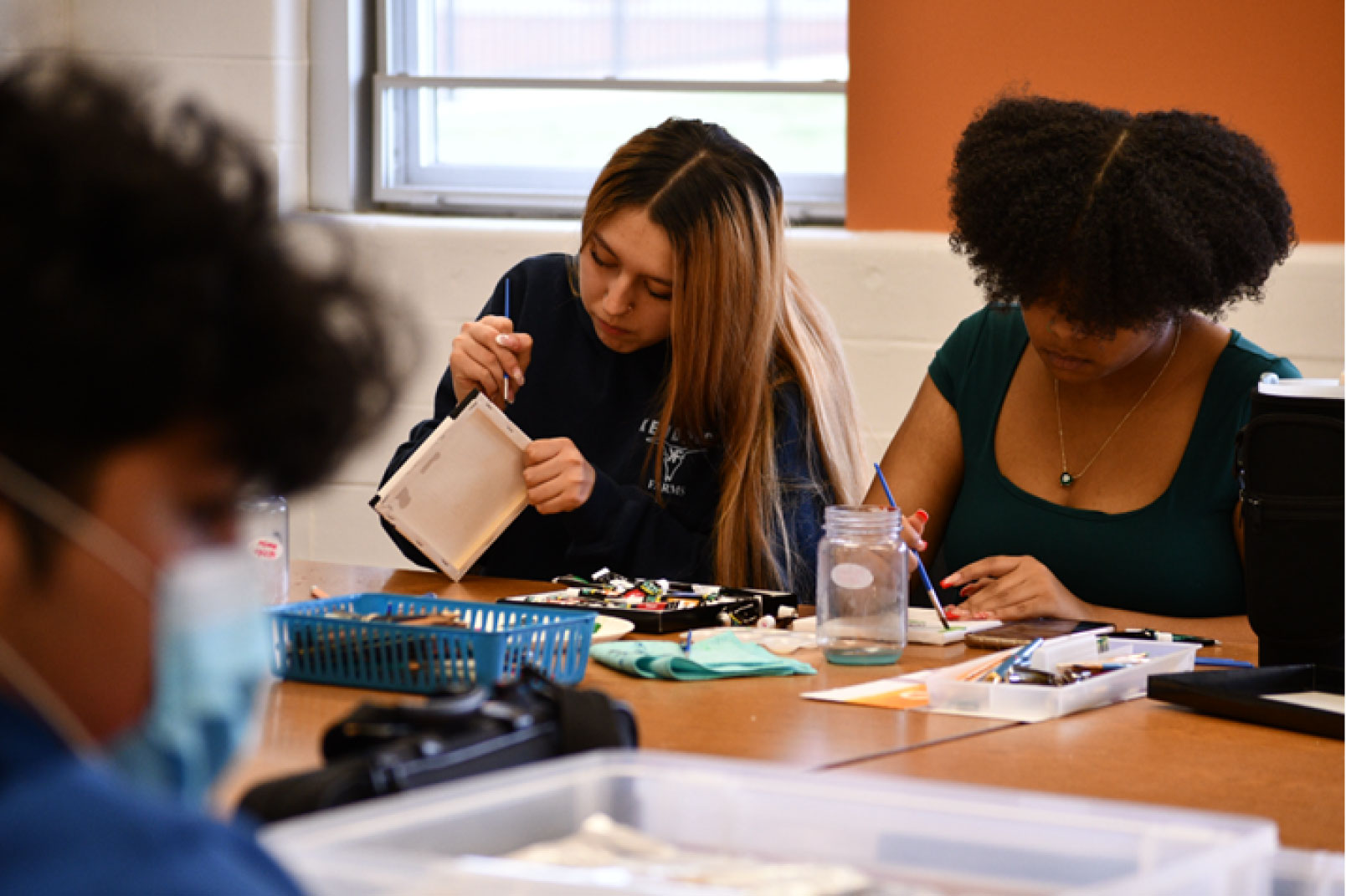
Farmer, the district leader overseeing the community schools grant, said that the new outreach has sparked conversations that help agencies, employers, families, and students understand the district’s goals. The district has also learned from partners as they explained what they want to gain from the collaboration.
“It is still really early in the grant, and it’s very encouraging that we can get this much accomplished in one year,” she said. “It feels like we are not doing it alone anymore — and that we are really moving the needle.”
Dakota Yates, Danville’s community schools director, said he has been impressed by how much entities, programs, and individuals in place in the community can help the school district, which serves almost 1,700 students.
“I’ve learned that the wheel is already there — don’t try to reinvent it, but help it to grow and expand,” he explained. “Discuss and understand needs — what we have, what they have, and see how you can work together and grow.” After calls across the community last spring seeking collaborators, Yates compiled a list of 70 partner contacts. This school year, the roster grew to 100 who receive his monthly updates.
Strategic discussions between students, families and community partners has produced results, where outside providers supply services with the district coordinating logistics.
The results include a rotation of free afterschool offerings for high schoolers and middle schoolers each week provided by the local extension service, arts center, public library, and a food charity; mentoring from college students helping elementary pupils with school work and assisting high schoolers on topics from writing admissions essays to financial aid; and events like a forum for parents on substance abuse issues where several local agencies shared expertise while other groups provided free child care and food.
One of the community groups now working closely with the Danville schools is Centre College, which created its own community partnership arm — CentreWorks — in 2020 to help students and faculty become more involved locally.
Jennifer Gander, the CentreWorks director, said that a productive partnership effort requires focused and sustained leadership to maximize community resources and keep outside contributors engaged.
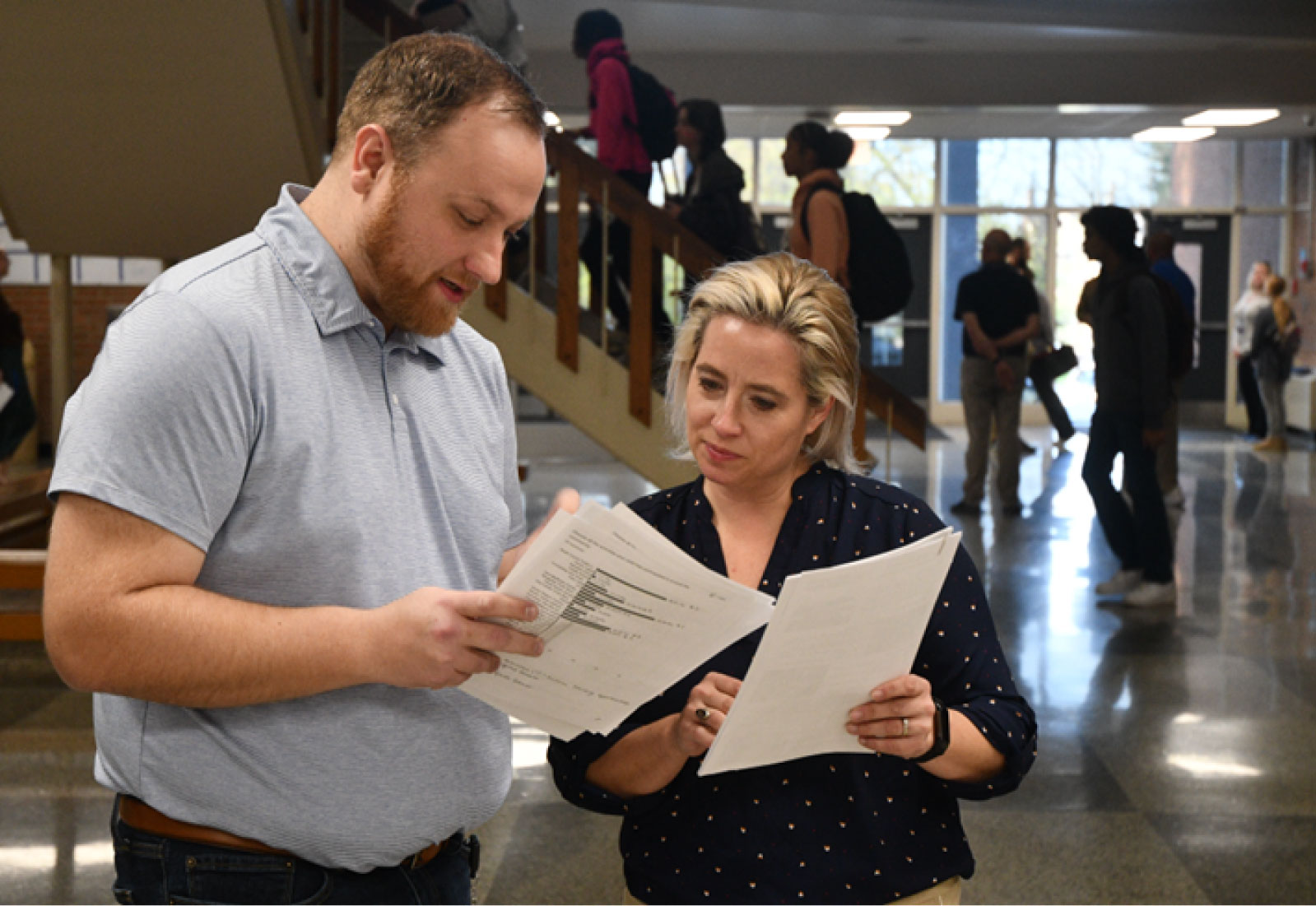
“Across the community, people want to lift up the school system, but somebody is needed to know what’s out there, what’s needed, and where and how to create more. Dakota, in his position, helps to catalyze that and move it along faster,” Gander said. “For me, he’s a thought partner who can figure out what we can do, how it fits, and ways to manage resources and carve out time. Someone in that position is really valuable.”
Farmer said Danville’s partnership approach has delivered both immediate results and added momentum. “We are opening our doors to people, and many of the partners and families we’ve been able to involve are now our champions,” she said. “They can explain what we’re doing and get other people involved in our work.”
Successful schools are a longstanding community priority, added Jessie Mahaffey, the community schools director in rural Rockcastle County. However, ongoing work is required to make sure communication is effective and that families and residents feel welcome and wanted. Local leaders were interested in the community schools grant because that link needed to be renewed.
“This job is all about building relationships and relating to people what our schools are doing and what they need,” he said. Mahaffey added that people both inside schools and outside in the 2,700-student Rockcastle district have concerns that need to be understood and addressed. The messages “we’re listening” and “we need you” have been central themes that may have been undervalued.
“Opening up the lines of communication is huge,” Mahaffey said. “The community is starting to understand the issues schools are dealing with, the lack of resources we have, and how everyone can help.”